

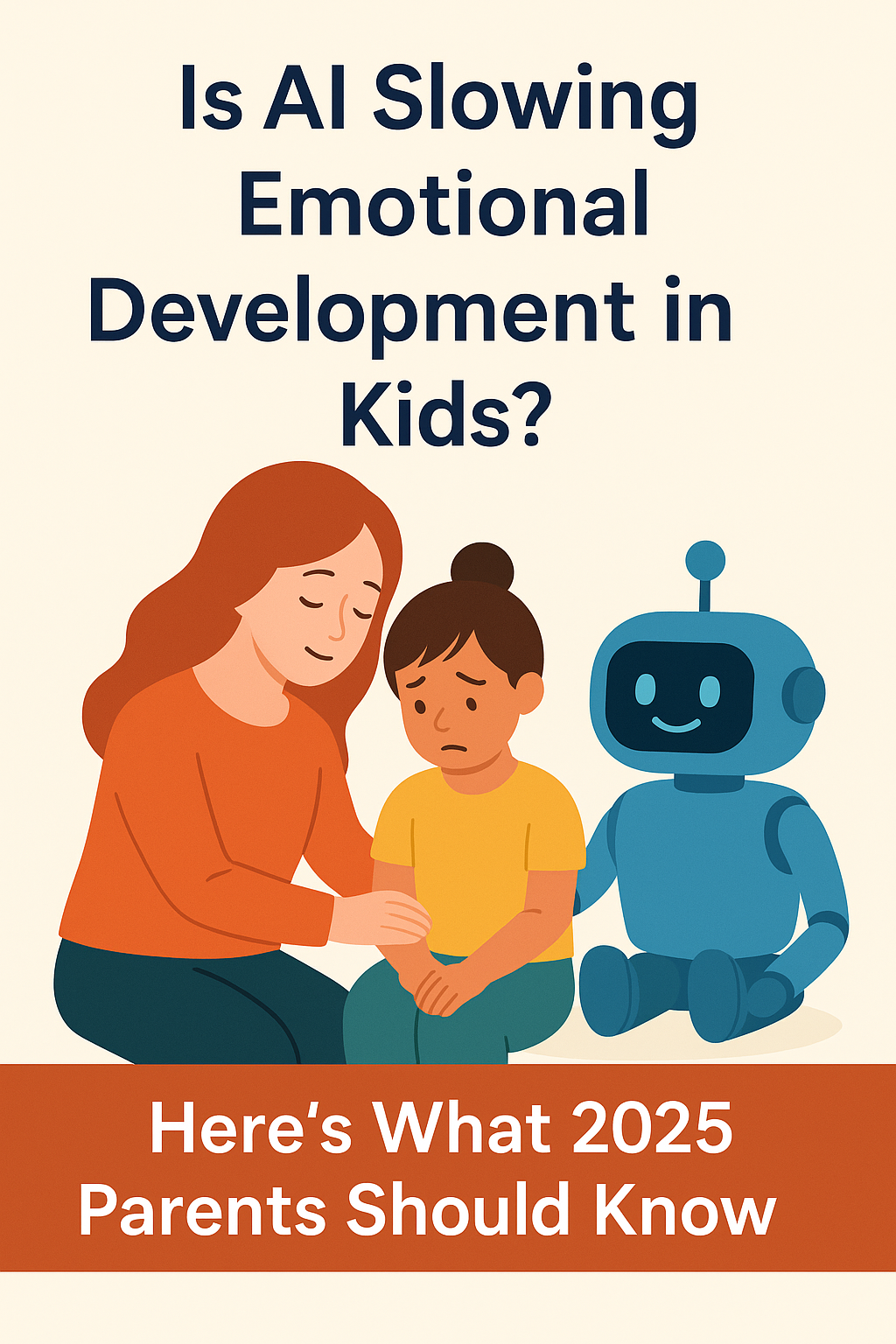
“Smart gadgets may be teaching numbers, but are they forgetting feelings?”
Introduction: A New Age Parenting Dilemma
AI is everywhere in 2025 — from bedtime story apps to AI-powered learning tools. It entertains, educates, and even comforts children. But an important question is rising among conscious parents:
“Is AI slowing down our kids’ emotional development?” While artificial intelligence is designed to be smart, it may not be emotionally intelligent — and that’s where the problem begins
What Does Emotional Development Mean for Kids?
Emotional development in children includes:
- Understanding feelings
- Learning empathy
- Expressing emotions through words and actions
- Building real-world social bonds
These are built through human connection — hugs, eye contact, real conversations, and play.
How AI Might Be Interfering With Emotional Growth
1. Lack of Real Emotion Feedback
AI doesn’t truly “feel.”
When kids interact with AI-based toys or apps, they miss:
- Facial expressions
- Emotional tones
- Real-time empathy
These are critical for developing emotional intelligence (EQ).
2. Delayed Empathy Development
AI instantly responds — there’s no waiting, no disappointment. But in real life:
- Emotions are complex
- People take time to react
- Kids must learn to understand others’ feelings
Too much AI interaction can weaken that learning curve.
3. Reduced Parent-Child Bonding
When parents hand over an AI assistant or screen to soothe a child:
- Eye contact, cuddles, storytelling — all go missing
- Emotional connection suffers
- Children start depending on devices for comfort
Real bonding creates emotionally resilient children. AI can’t replicate that.
4. Artificial vs. Authentic Learning
AI-based learning may teach ABCs, but not how to deal with sadness or jealousy.
Only human interactions — with parents, siblings, or peers — help kids:
- Express themselves
- Handle emotions
- Recognize others’ feelings
Real-Life Warnings from 2025 Parents
Parents in India and globally are sharing concerns:
- “My child talks more to Alexa than to us.”
- “He throws tantrums when the app doesn’t respond fast enough.”
- “She prefers robot stories over my bedtime talks.”
These aren’t isolated stories — they reflect a growing emotional disconnect.
How to Use AI Without Harming Emotional Development
AI isn’t the enemy. But mindful use is key.
Do This:
- Use AI tools with your child, not instead of you
- Limit screen time
- Focus on emotion-rich activities: drawing, storytelling, pretend play
- Encourage face-to-face interaction with friends and family
- Let them feel boredom — it builds imagination!
Final Thoughts: Raise Humans, Not Robots
AI can assist. But it should never replace the rich, imperfect, and deeply emotional process of human parenting.
As a parent in 2025, ask yourself:
“Is my child growing smarter… or just more screen-dependent?”
Because at the end of the day, empathy > efficiency — and your hugs, voice, and attention are more powerful than any AI.
Discover more from Online Guruji
Subscribe to get the latest posts sent to your email.
Hey, milyoners! Just saw the milyon88 com promotion. Seriously thinking of jumping in, seems like a solid deal. Anyone else checked it out? Fingers crossed for some wins! Check out the deals here milyon88 com promotion
Heard some buzz about casinoganamax. Going to give it a whirl tonight. The site looks slick and the bonuses are tempting. Wish me luck! Learn more here: casinoganamax