

Introduction: When Faith Meets Ancient Healing
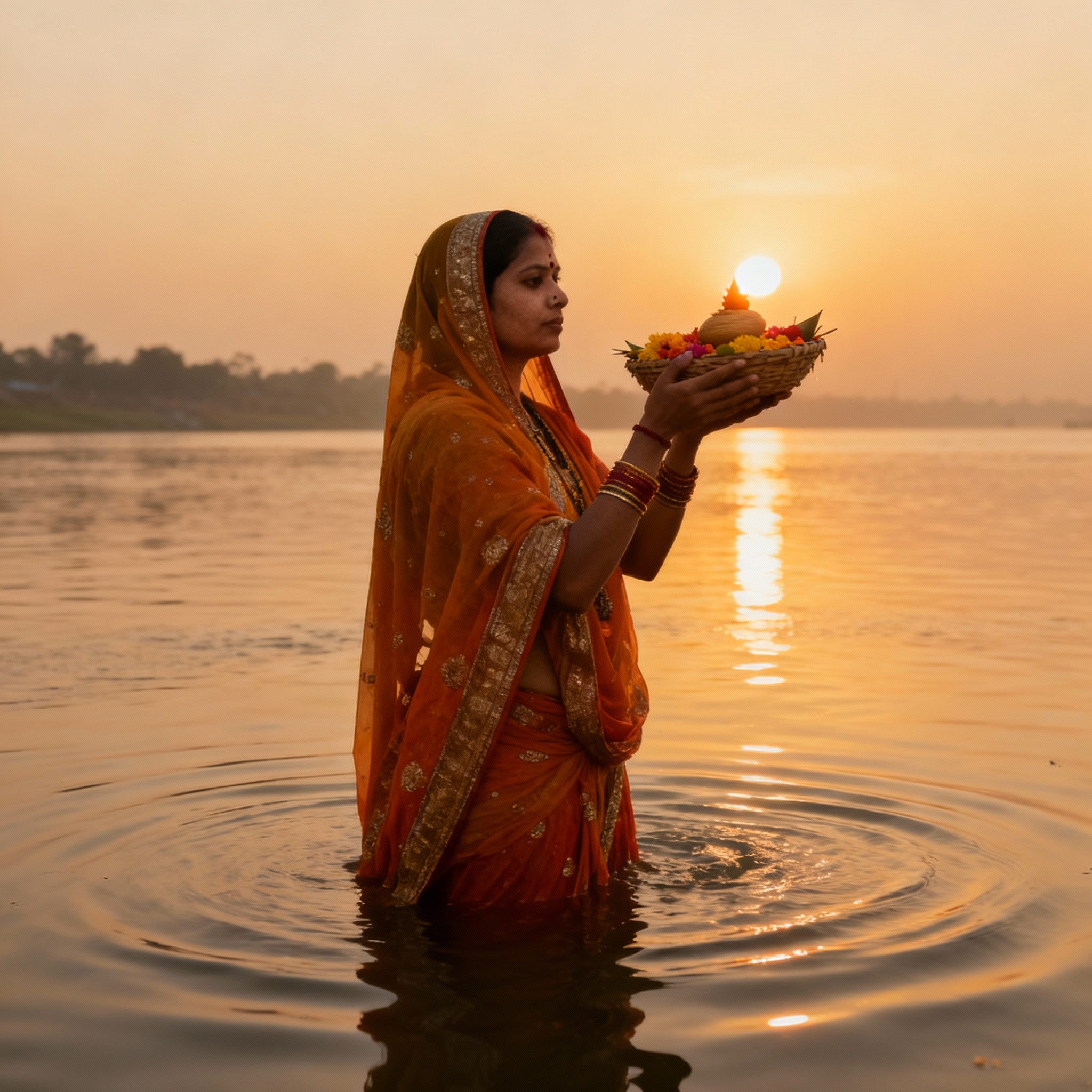
As dawn breaks over the holy rivers of India, millions stand silently with folded hands, eyes closed, facing the rising sun. The air vibrates with devotion — “Chhathi Maiya ke Jai!” — a chant that echoes gratitude, purity, and surrender. This sacred scene marks Chhath Puja, one of India’s oldest sun-worshipping rituals.
But behind the spiritual grandeur lies something deeper — Ayurvedic science. Long before modern medicine discovered the health benefits of sunlight, Ayurveda recognized Surya (the Sun) as the source of vitality, balance, and healing.
In fact, the rituals of Chhath Puja align beautifully with Ayurvedic principles — from fasting and detoxification to sun therapy and gratitude. Let’s explore how this ancient festival is not just a celebration of faith, but also a powerful natural healing process — a living example of “wellness through worship.”
The Sun in Ayurveda: The Source of Life and Healing
In Ayurveda, the Sun is called “Surya Deva”, symbolizing light (Tejas), energy (Agni), and life force (Prana). Without the sun, nothing on Earth can exist — not plants, not animals, not humans.
According to ancient Ayurvedic texts like the Charaka Samhita and Sushruta Samhita, Surya governs our body’s metabolism, digestion, and mental clarity. The warmth and light of the sun are believed to stimulate the body’s internal fire (Agni), responsible for transforming food into energy.
When Surya is balanced within us, we feel energetic, focused, and emotionally stable. When it’s weak — due to stress, poor diet, or lack of sunlight — we experience fatigue, low immunity, and depression.
So, in essence, worshipping the Sun during Chhath Puja is not just an act of faith — it’s a form of Ayurvedic healing, balancing the inner and outer energy of life.
Surya Chikitsa: The Ancient Science of Solar Healing
Ayurveda recognizes “Surya Chikitsa”, or Solar Therapy, as a powerful healing practice. It teaches that the sun’s rays contain subtle energies that cleanse, nourish, and rejuvenate the body.
1. Early Morning Rays: The Purest Form of Energy
The rays during sunrise are rich in infrared and red-spectrum light, which gently activate the body’s cells, improve blood circulation, and support Vitamin D synthesis — crucial for strong bones and immunity.
This is why in Chhath Puja, devotees offer arghya to the rising sun — symbolizing acceptance of this healing energy into their lives.
2. Sun Exposure and Prana Balance
Ayurveda states that our body’s prana vayu (life force energy) aligns with the sun’s rhythm. Spending time in morning sunlight restores this balance, improving digestion, mood, and sleep.
During Chhath Puja, devotees stand waist-deep in water while offering prayers. This posture allows sunlight to be absorbed through the skin while being cooled by water, balancing pitta dosha (the fire element).
3. Sun Gazing with Devotion
Devotees often gaze softly at the setting or rising sun while meditating. This isn’t just symbolic — it helps stimulate the pineal gland, enhancing hormonal balance and mental clarity. Ayurveda calls this “Chakshu Shuddhi” — purification of the eyes and mind.
Chhath Puja Rituals Through the Lens of Ayurveda
Every ritual of Chhath Puja mirrors an Ayurvedic practice — making it one of the most holistic spiritual detoxes known to humankind.
1. Nahay Khay – The Cleansing Start
The first day of Chhath begins with a holy bath and eating simple, sattvic food like lauki-bhaat (bottle gourd and rice cooked in ghee).
Ayurvedic Insight:
This ritual is a form of “shuddhi” (cleansing). Lauki cools pitta dosha, rice stabilizes vata, and ghee nourishes kapha — together balancing all three doshas. It prepares the body for fasting and detoxification ahead.
2. Kharna – The Detox Fast
On the second day, devotees observe a day-long fast, breaking it only after sunset with jaggery kheer and fruits — before starting a 36-hour nirjala vrat (without food or water).
Ayurvedic Insight:
This is a deep Ayurvedic detox. Fasting allows Agni (digestive fire) to reset, flushing out ama (toxins) and rejuvenating cells. The combination of jaggery and milk restores minerals and glucose gently, while fruits provide antioxidants.
The nirjala fast enhances mental focus and emotional discipline, teaching control over desires — a key Ayurvedic principle of Brahmacharya (self-restraint).
3. Sandhya Arghya – Worship to the Setting Sun
As the sun sets, devotees offer water and fruits to the fading light, thanking Surya Dev for health and prosperity.
Ayurvedic Insight:
Sunset is the body’s natural transition phase — where energy shifts from pitta (fire) to kapha (coolness). By performing rituals at this time, the body synchronizes with nature’s rhythm. The silence and standing posture in water enhance circulation, digestion, and emotional balance.
4. Usha Arghya – Worship to the Rising Sun
At dawn, devotees offer arghya again, this time to the rising sun — absorbing the first rays of morning light.
Ayurvedic Insight:
Morning sunlight triggers serotonin and endorphin release, uplifting mood and stabilizing hormones. It also aids Vitamin D production — crucial for immunity and vitality.
In Ayurveda, sunrise symbolizes renewal of life force (prana) — hence, this ritual awakens the mind and body to a new cycle of energy.
The Ayurvedic Science Behind Fasting and Self-Control
Fasting (Upavasa) is an integral part of Ayurveda. It is not just physical abstinence but a mental and spiritual discipline.
During Chhath, devotees practice complete sensory control — no food, water, or even sleep in some cases. Ayurveda believes this allows the body’s energy to redirect inward, purifying the nadis (energy channels) and calming the mind.
Modern science agrees: intermittent fasting improves metabolism, reduces inflammation, and enhances brain function — validating what Ayurveda taught thousands of years ago.
Thus, Chhath Puja becomes a living Ayurvedic therapy — where the devotee heals body, mind, and soul simultaneously.
Elemental Balance: Panchamahabhuta and Chhath Puja
Ayurveda is based on the five elements (Panchamahabhuta) — Earth, Water, Fire, Air, and Ether. Every ritual in Chhath Puja honors these natural elements:
| Element | Ritual Connection | Ayurvedic Effect |
| Earth (Prithvi) | Standing barefoot on the riverbank | Grounding and stability |
| Water (Jal) | Offering arghya while half-submerged | Detoxification and emotional cleansing |
| Fire (Agni) | Sun worship | Energy, digestion, vitality |
| Air (Vayu) | Deep breathing during prayer | Oxygenation and calmness |
| Ether (Akash) | Silence and meditation | Mental clarity and spiritual awareness |
Through this balance, Chhath aligns the human body with nature’s universal rhythm — the ultimate goal of Ayurveda.
Thekua, Ghee, and Fruits: Ayurvedic Offerings with Purpose
Every item used in Chhath Puja has symbolic and nutritional significance.
- Thekua: Made with wheat, jaggery, and ghee — it’s tridosha-balancing, sustaining energy after fasting.
- Banana: Rich in potassium, it helps restore electrolyte balance.
- Coconut: Hydrating and cooling for pitta.
- Sugarcane: Boosts glucose levels and aids liver function.
- Ghee Lamps: Burning ghee purifies the air and signifies internal Agni (light of consciousness).
Thus, the prasad isn’t just sacred — it’s scientifically wholesome.
Emotional and Mental Healing Through Devotion
Ayurveda believes in “Manas Shuddhi” — cleansing of the mind. During Chhath, silence, self
Discover more from Online Guruji
Subscribe to get the latest posts sent to your email.
Alright, listen up: dangkysv388 is where it’s at if you’re serious. The registration process was a breeze, and I was playing in minutes. Definitely worth a shot. You gotta try dangkysv388
Definitely check out the Tiger888apk! The UI is great for mobile, I can get my game on anytime. Worth a download tiger888apk
That’s a fascinating take on handicapping! Building a solid foundation – like a well-structured learning path – is key. I’ve been exploring platforms like Pinas777 Login, focusing on deliberate practice & resource management. Seems crucial for long-term success!
Heard some buzz about plataforma348bet and gave it a shot. Not bad, not bad at all. A decent platform with a solid selection. Give plataforma348bet a look plataforma348bet
Alright, so I’ve been hearing whispers about 918bet. Thinking about checking it out. Anyone already playing? Share your experiences, good or bad! 918bet
So, I downloaded the 512betapp. Mobile experience was alright – clean and functional. It’s convenient being able to place bets and play games on the go via 512betapp.
I bought tickets online during my free evenings and it was such a relaxing way to unwind. The chat rooms are super friendly and I actually made some cool friends while playing. Prizes are distributed pretty quickly and the whole experience feels very safe. Perfect for casual players who want a chill vibe cobingoencasa