

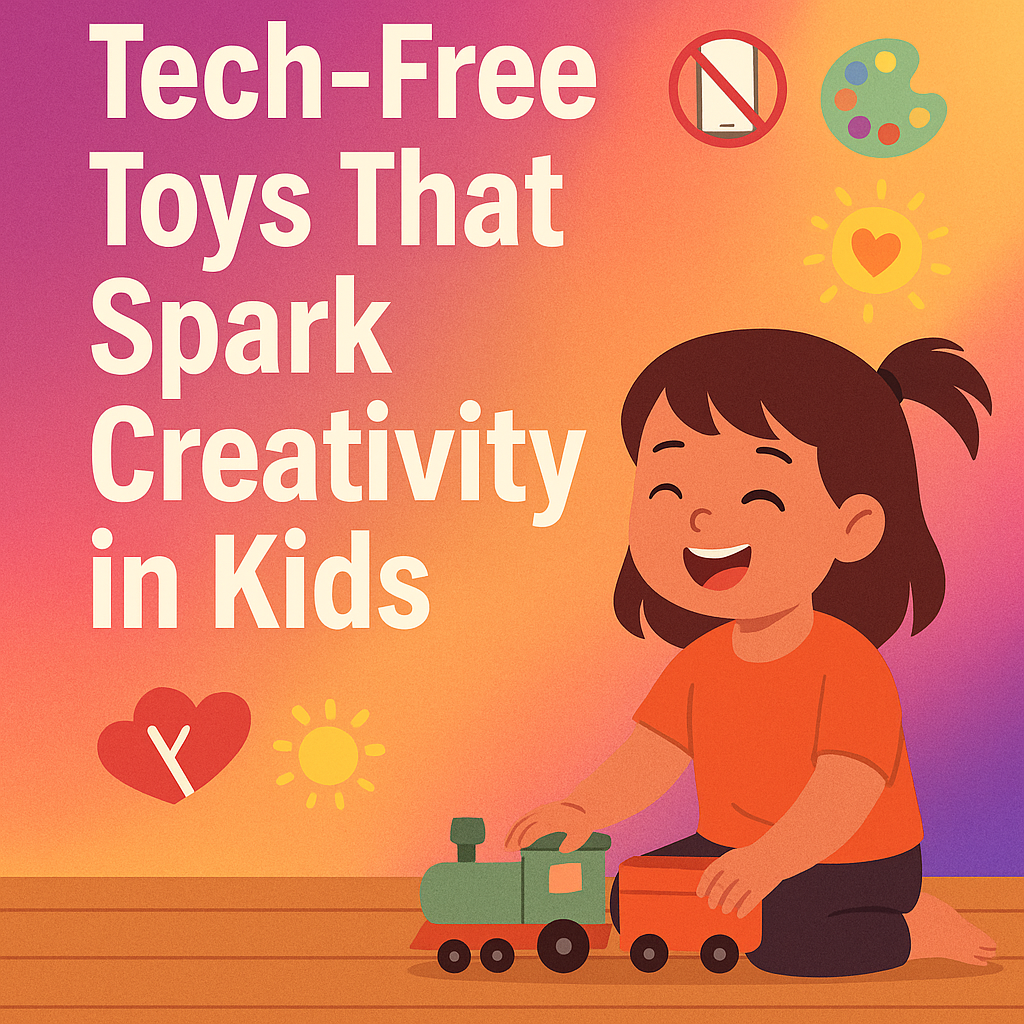
In a world where digital screens dominate almost every aspect of life, finding ways to keep kids engaged—without tech—can feel like a challenge. But here’s the truth: children don’t need flashy apps or beeping gadgets to thrive. What they truly need is room for their imagination to breathe, and nothing does that better than tech-free toys.
As more parents grow concerned about screen addiction, attention issues, and a lack of hands-on play, there’s a beautiful shift happening in 2025: the return of creativity-centered, unplugged play. This article explores how tech-free toys are not only sparking creativity in kids—but also helping them grow smarter, happier, and more emotionally balanced.
Why Tech-Free Toys Are Making a Comeback in 2025
Digital devices offer convenience, but they also rob children of the essential building blocks of imagination. Constant stimulation from screens leaves little room for creativity. In contrast, non-digital toys invite kids to be the creators, not just consumers.
Parents today are waking up to this truth. Tech-free play encourages:
- Problem-solving
- Storytelling
- Physical activity
- Emotional expression
It’s not about being anti-technology—it’s about being intentional with playtime.
What Makes a Toy “Tech-Free” and Creative?
A tech-free toy doesn’t rely on batteries, screens, or electronics. Instead, it challenges the child’s brain to create, imagine, build, or pretend. The simpler the toy, the more it invites open-ended play.
Examples include:
- Wooden blocks
- Art supplies
- Dolls and action figures
- Pretend kitchen sets
- Musical instruments
- Nature-based toys (like stones, shells, or leaves!)
The magic lies not in how the toy works—but in what the child can do with it.
7 Tech-Free Toys That Spark Creativity in Kids
Let’s look at seven powerful, screen-free toys that boost imagination while keeping your child joyfully engaged:
1. Building Blocks and LEGO Sets
Simple, stackable, and open-ended—blocks allow endless construction possibilities. Whether it’s a spaceship, a zoo, or a dream home, kids learn:
- Spatial thinking
- Fine motor skills
- Creative engineering
Tip: Avoid sets that are too structured. Let them build their own creations instead of just following instructions.
2. Dollhouses and Figurines
Tiny worlds lead to big imagination. When kids role-play with dolls or animal figurines, they create stories, develop empathy, and act out real-world scenarios.
Encourage them by asking:
“What’s your tiger doing today?”
“Does your doll have a school or go to the jungle?”
3. Art Supplies and Craft Kits
Give a child paper, colors, scissors, and glue—and watch magic happen. Art is a direct line to imagination. It also helps express emotions they can’t put into words.
Stock your home with:
- Crayons, sketchbooks, watercolors
- Beads, buttons, threads
- Recyclables like cardboard, boxes, straws
Pro Tip: Create a “creativity corner” in your home where your child can freely experiment.
4. Play Kitchens and Tool Sets
These pretend play toys mimic real-life scenarios and help develop:
- Vocabulary
- Social skills
- Sequential thinking
From “making soup for the queen” to “fixing the spaceship sink,” the possibilities are endless!
5. Puppets and Hand-made Story Toys
Puppets are underrated treasures. Kids can act out stories, emotions, or even have conversations with their toys. You’ll be amazed at the storytelling skills they develop.
You can also make DIY sock puppets for extra fun and bonding.
6. Outdoor Toys: Jump Ropes, Chalk, Balls
Sometimes the best toys don’t fit in a toy box! Outdoor play encourages body movement and mental freshness. Even drawing with sidewalk chalk or playing hopscotch stimulates imagination and coordination.
Nature also inspires: leaves, pebbles, mud, water—all become play tools in a child’s world.
7. Board Games and Puzzle Sets
Tech-free and social, puzzles teach patience and problem-solving, while board games teach rules, turn-taking, and strategy.
Go for games like:
- Memory match
- Guess Who
- Snakes and Ladders
- UNO (great for logic and numbers)
You don’t have to invest in expensive “educational” toys. Creativity lives in simplicity. Some of the most effective tools are free or already in your home:
- A cardboard box becomes a castle.
- A bedsheet becomes a superhero cape.
- A stick becomes a magic wand.
Let your child lead the way.
Long-Term Benefits of Tech-Free Play
Unplugged playtime offers benefits that go far beyond the moment:
- Improved concentration and self-control
- Better sleep and reduced screen-induced anxiety
- More imaginative storytelling and cognitive flexibility
- Stronger family bonding and reduced tantrums
When children create from within, they trust their inner voice—a gift that lasts a lifetime.
How to Start the Shift (Without a Fight)
Transitioning your child from tech toys to creative play doesn’t have to be a battle. Here’s how:
- Start small: Introduce one tech-free toy at a time.
- Play with them: Be part of their world initially to spark interest.
- Set screen-free hours: Like “creative play mornings” or “no-screen Sundays.”
- Model boredom: Let them see that it’s okay to be bored sometimes. That’s where creativity grows.
Conclusion: Give Their Imagination Room to Roam
In 2025, a screen may entertain—but it’s the unstructured, unplugged play that nurtures the heart, mind, and imagination. By choosing tech-free toys, you’re giving your child space to think, dream, and grow.
So next time your child says, “I’m bored,” smile and hand them a cardboard box, a handful of crayons, or a wooden block. You’re not just fighting screen time—you’re raising a creative problem solver who’s ready to color the world in their own unique way.
Discover more from Online Guruji
Subscribe to get the latest posts sent to your email.
Feeling lucky after trying 777tiger6! A few decent wins. The graphics are alright, and the site’s easy to use. Give it a whirl at 777tiger6!
Okay, the name’s a bit weird, right? 98winfarter…but the site itself is decent. Don’t let the name put you off. Some interesting games on there. Give 98winfarter a peek, you might be surprised.