

Introduction
In today’s fast-paced, screen-heavy world, children are dealing with more emotional pressure than we realize. While we ensure they eat well, study hard, and stay safe, we often overlook their emotional well-being — simply because signs are subtle or misunderstood.
Let’s dive into 7 common emotional health aspects that most parents miss, and how you can support your child holistically.
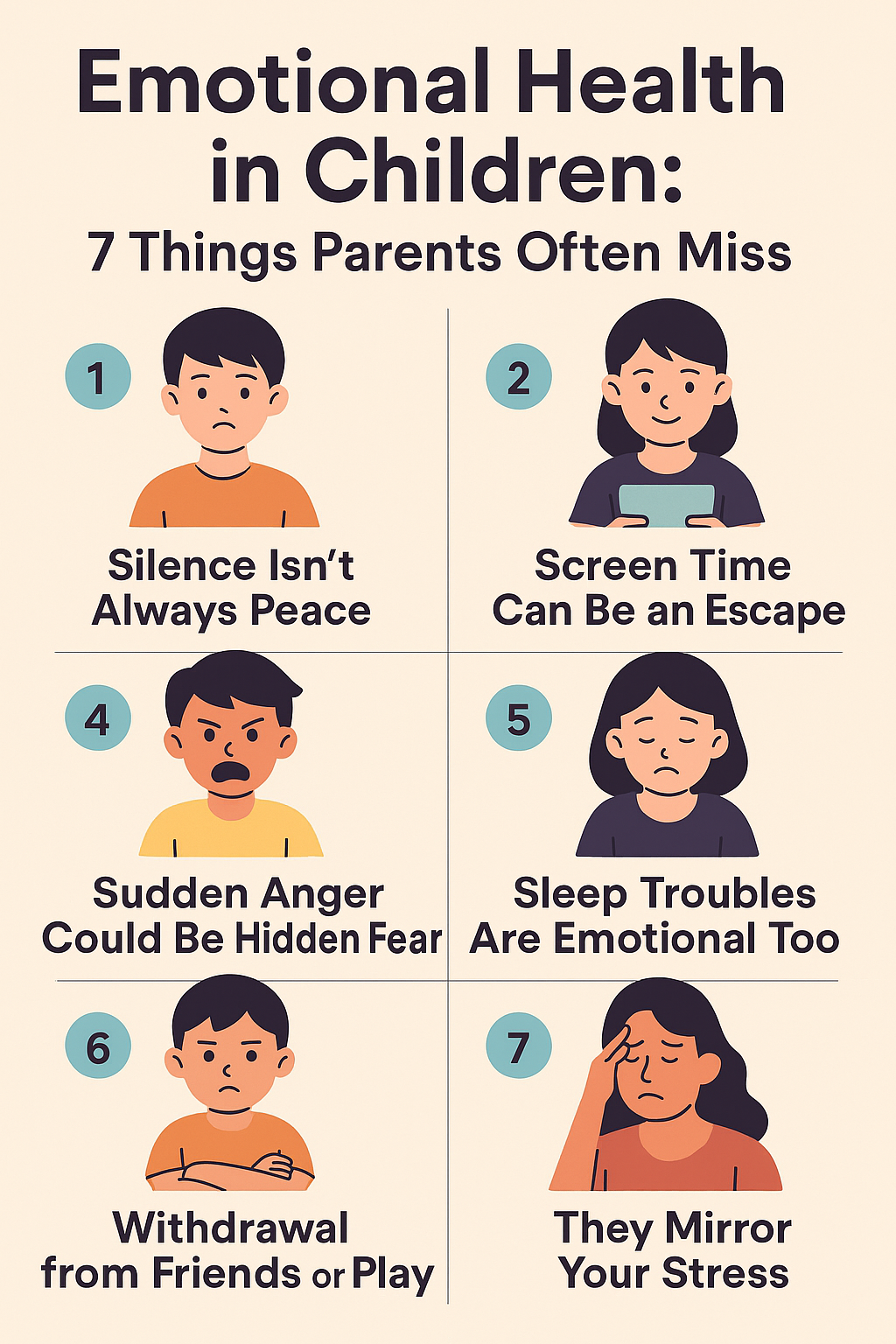
1. Silence Isn’t Always Peace
A quiet child is often mistaken as “well-behaved” — but silence can be a sign of emotional suppression. They might be feeling unheard, ignored, or overwhelmed but don’t know how to express it.
What to do:
Encourage small daily conversations. Ask open-ended questions like,
“What made you happy today?” or “Was there anything that felt unfair today?”
2. Over-Smiling Can Be a Mask
Some kids smile or joke all the time — even when they’re hurting inside. This is called “emotional masking”, where a child pretends everything is fine to avoid conflict or being a burden.
What to do:
Validate their real feelings. Let them know it’s okay to be sad, angry, or confused — emotions aren’t bad; they’re human.
3. Screen Time Can Be an Escape
Does your child spend hours on YouTube, video games, or reels?
It might not just be addiction — it could be an emotional escape from anxiety, loneliness, or feeling unwanted.
What to do:
Instead of just cutting screen time, observe what they’re escaping from. Are they bored? Unheard? Is school overwhelming?
4. Sudden Anger Could Be Hidden Fear
Frequent meltdowns or tantrums might not always be “bad behavior.”
Children express stress, confusion, or fear through anger, especially when they don’t have words to explain their feelings.
What to do:
After they calm down, gently ask:
“What made you feel upset earlier?”
Avoid punishment — aim for understanding first.
5. Sleep Troubles Are Emotional Too
If your child has trouble falling asleep, wakes up crying, or fears the dark — it may be more than physical. Often, emotional anxiety shows up at bedtime, when the world quiets down.
What to do:
Add a calming sleep routine:
Soft music, bedtime stories, hugs, and asking,
“Is something on your mind before sleep?”
6. Withdrawal from Friends or Play
If a once-social child suddenly avoids friends, games, or school activities — something is emotionally off.
It could be bullying, fear of failure, or even comparison.
What to do:
Rebuild their confidence.
Say: “I love how you try, even when it’s hard.”
Help them reconnect with safe friends or activities they love.
7. They Mirror Your Stress
Children are emotional sponges.
If you’re constantly stressed, angry, or anxious, they absorb your emotional energy, even if you never say it aloud.
What to do:
Work on your own emotional hygiene.
Show them how you take breaks, breathe deeply, or express feelings calmly.
Emotional Wellness Checklist for Parents:
Do you listen without interrupting?
Do you name emotions with your child?
Do you hug them without a reason?
Do you say “I’m sorry” when you’re wrong?
Do you celebrate effort, not just success?
Final Thoughts
“Your child’s emotional world is just as real and complex as yours — they just express it differently.”
Caring for your child’s emotional health doesn’t need therapy or textbooks — it needs patience, presence, and unconditional love.
Be their safe space. Be their listener. Be their emotional guide.
Discover more from Online Guruji
Subscribe to get the latest posts sent to your email.
Hey hey! Gamef88, eh? Worth a peek if you wanna try something different. Jump on over to gamef88
Roar! Scratched my itch for some exciting slots at tiger777mx. Pretty decent selection of games, and the interface is user-friendly. Winnings are paid out quickly, which is always a plus. Check em’ out: tiger777mx. Good luck, and watch the claws!