

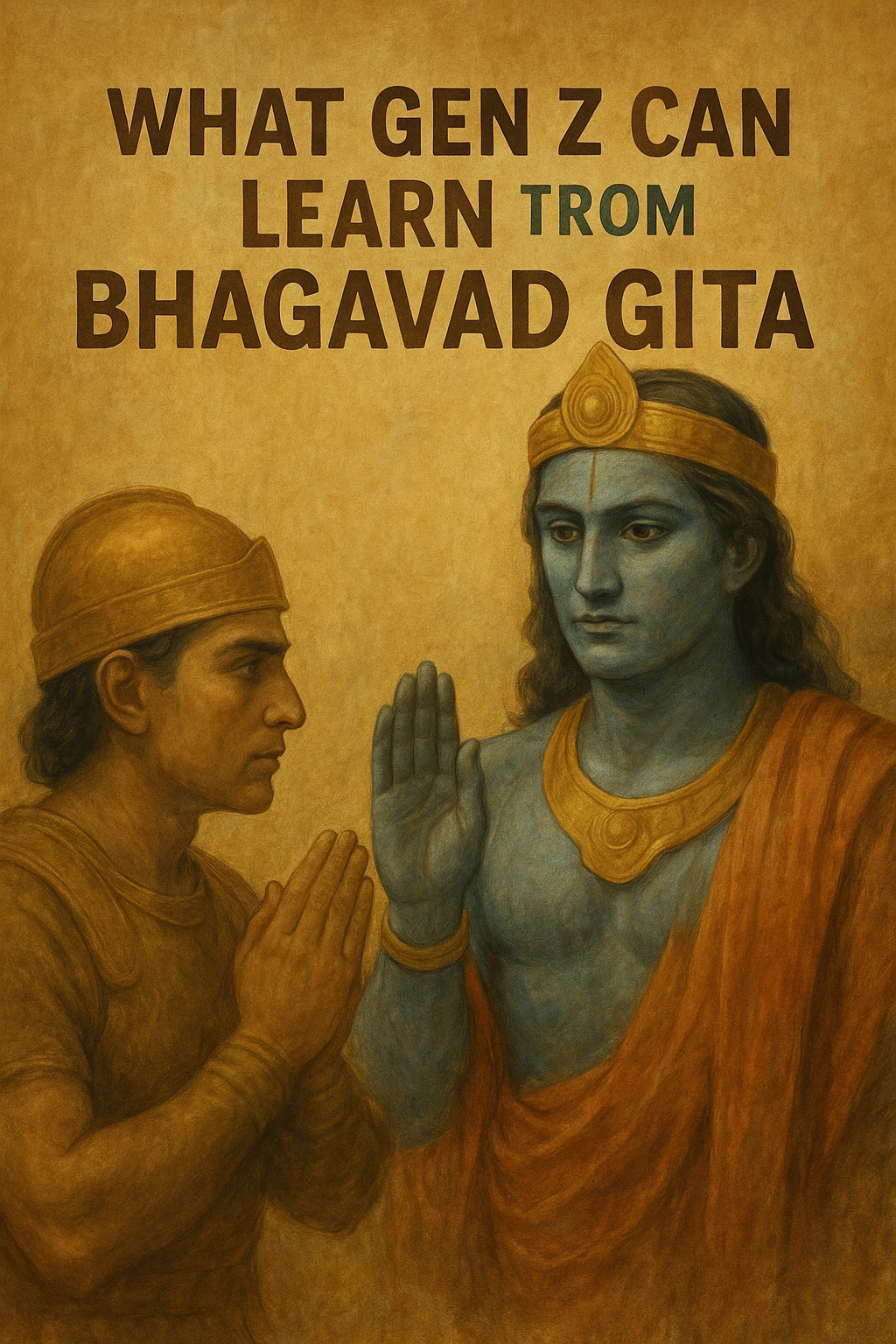
Introduction: A 5000-Year-Old Book in Gen Z’s Backpack?
In a world dominated by AI, hustle culture, and social media, it may sound surprising that Gen Z is turning to an ancient scripture for answers.
But that’s exactly what’s happening.
Across college campuses, YouTube channels, mental health groups, and even Instagram Reels — the Bhagavad Gita is having a modern revival.
Why are 18–30-year-olds finding comfort and clarity in a 700-verse Sanskrit dialogue from thousands of years ago?
Let’s dive in.
The Gen Z Dilemma: Clarity Crisis in the Age of Noise
Gen Z faces challenges that are unique and intense:
- Overstimulation from screens
- Decision fatigue in every aspect of life
- Identity crises fueled by comparison
- Rising mental health issues (anxiety, FOMO, burnout)
- Pressure to succeed, look good, be perfect… all the time
In the midst of this, the Bhagavad Gita offers grounding, clarity, and inner strength.
“You have a right to perform your duty, but not to the fruits of action.” — Gita 2.47
This single verse is now quoted in digital detox retreats and career coaching sessions alike.
5 Timeless Gita Lessons Resonating with Gen Z Today
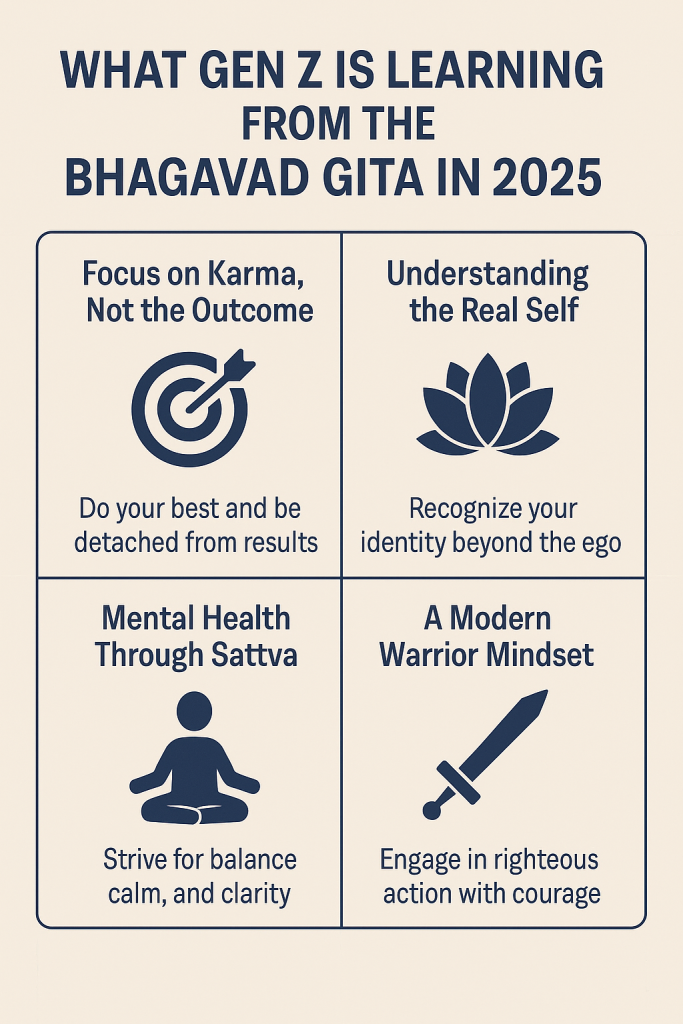
1. Focus on Karma, Not the Outcome
Modern Translation: Stop stressing about results. Do your best and let go.
From exam pressure to job rejections, Gen Z is learning to:
- Detach from result-obsession
- Reduce anxiety about the future
- Find satisfaction in the process, not just the prize
2. Understanding the Real Self (Atma)
In a world of selfies, filters, and hyper-curated digital identity, the Gita reminds:
“The soul is eternal. Weapons cannot cut it, fire cannot burn it.” — Gita 2.23
This teaching helps Gen Z:
- Separate self-worth from likes/followers
- Build inner confidence
- Stay rooted in something deeper than trends
3. Overcoming Confusion Through Clarity (Viveka)
Arjuna’s battlefield confusion mirrors modern dilemmas:
“What job should I take?”
“Is this relationship right?”
“What’s my purpose?”
Krishna doesn’t give easy answers. He helps Arjuna think clearly, through detachment and duty — skills that help in real life too.
4. Mental Health Through Sattva (Balance)
Many Gen Z seekers are resonating with:
- The three Gunas (Sattva, Rajas, Tamas)
- The importance of mental balance, clean food, and mindful choices
Apps and influencers are now combining Gita wisdom with:
- Journaling practices
- Yoga and breathwork
- Even therapy frameworks
5. A Modern Warrior Mindset
Gen Z isn’t just avoiding conflict—they want to fight the right battles:
- For climate justice
- For mental health awareness
- Against toxic productivity
The Gita’s emphasis on Dharma (righteous action) is empowering this generation to stand up with courage and compassion.
Why the Bhagavad Gita Is Becoming a Mental Health Manual
Psychologists now acknowledge:
- Gita’s teachings reduce cognitive dissonance
- It encourages emotional resilience
- It promotes meaningful decision-making
It’s not just a scripture — it’s a tool for emotional intelligence.
Bhagavad Gita vs Modern Self-Help: A Quick Look
| Concept | Gita | Modern Self-Help |
| Focus | Detachment | Productivity |
| Identity | Eternal soul | Brand/image |
| Emotions | Accept and rise | Suppress/“hack” |
| Goals | Dharma (duty) | Success/fame |
| Action | Karma Yoga | Hustle mindset |
Conclusion: Why the Gita Speaks to a Lost Generation
Gen Z isn’t just looking for advice.
They’re looking for meaning.
And the Bhagavad Gita delivers that in every chapter.
In a world of chaos, Krishna’s voice whispers timeless truths —
Not to make us religious, but to make us resilient, reflective, and real.
Discover more from Online Guruji
Subscribe to get the latest posts sent to your email.
Finally found a decent spot for esports betting! fun88esport seems to know their stuff. Good odds, plenty of games to choose from. Definitely giving them a shot. Check out fun88esport!
Thinking about checking out my88. What’s the overall vibe? Are the odds any good? Spill the tea! Worth a shot at my88