

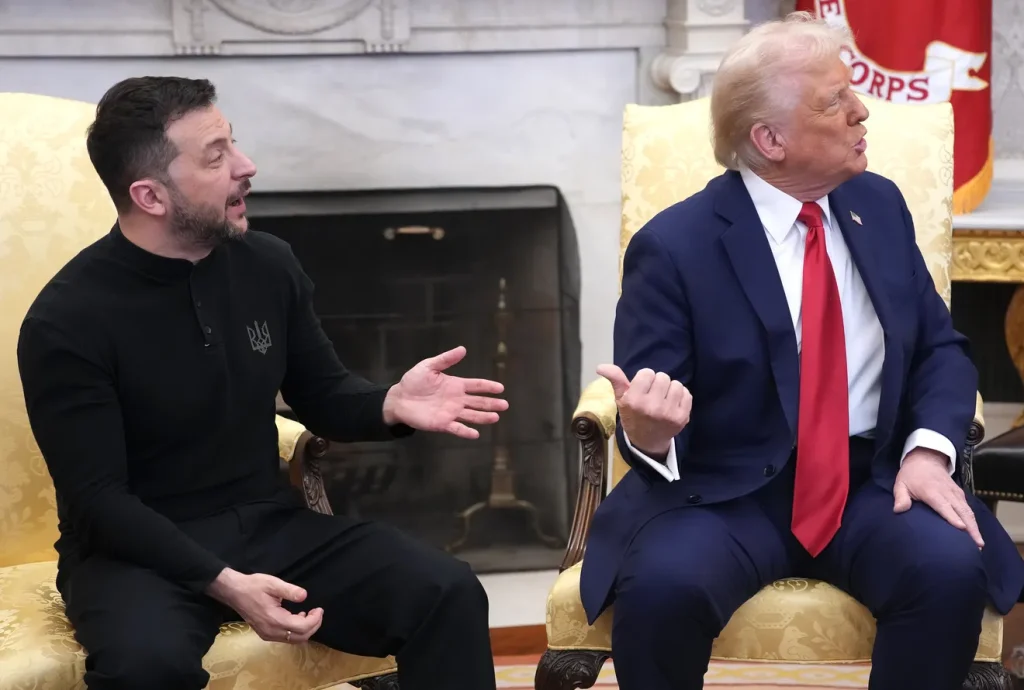
The world watched with bated breath as U.S. President Donald Trump and Ukrainian President Volodymyr Zelensky met recently — a meeting that was meant to showcase unity but instead ignited a storm of political drama. The tension in the room was palpable, the stakes higher than ever, and the global ripples from their clash continue to shape the future of international alliances.
While Trump accused Zelensky of being “disrespectful” and of “gambling with World War Three,” the Ukrainian leader stood firm, countering that negotiating with Vladimir Putin was like trying to shake hands with a shadow. This fiery exchange didn’t just expose cracks in U.S.-Ukraine relations — it sent shockwaves through Europe and beyond.
But here’s the kicker: as the U.S. shows signs of wavering, Europe is stepping up — big time.
Unity in the Face of Uncertainty
As the dust settles from the Trump-Zelensky showdown, one thing is clear: while political tensions rise, European unity grows stronger.
The UK’s multi-billion-dollar commitment, France and Germany’s unwavering support, and NATO’s collective resolve paint a picture of a Europe ready to stand firm — with or without the U.S.
For Ukraine, this means continued hope. For Russia, a stark warning. And for the world, a reminder that in times of crisis, alliances can shift, but solidarity endures.
Stay tuned as we follow this evolving story — because this is more than a political spat; it’s the reshaping of global power as we know it.
The UK: Leading the Charge with Billions in Aid to Ukraine
In a bold and symbolic move, UK Prime Minister Keir Starmer rolled out the red carpet for Zelensky just a day after his tense meeting with Trump. The atmosphere in London was a sharp contrast — warm welcomes, promises of steadfast support, and a staggering $3.3 billion loan for Ukraine’s defence.
But the UK didn’t stop there. Prime Minister Starmer made it clear that Britain’s support was more than just symbolic. The loan will be financed through profits from frozen Russian assets, ensuring that Putin’s war chest indirectly aids Ukraine’s defence efforts.
Furthermore, the UK announced plans to unlock over £2 billion from seized Russian funds, alongside a strategy to boost its own defence sector. Chancellor Rachel Reeves emphasized that the National Wealth Fund — worth £27.8 billion — would be restructured to support both Ukraine and British defence jobs.
And let’s not forget the humanitarian angle. The UK pledged an additional £120 million for Ukraine’s demining operations, energy security, and community resilience, pushing their total humanitarian aid to a whopping £477 million since the war escalated.
France and Germany: Europe’s Dynamic Duo
While the UK led with bold financial commitments, France and Germany brought their own muscle to the table. Germany, already the largest European military donor to Ukraine, has contributed an impressive €10.6 billion since the start of the conflict.
France, not to be outdone, has pivoted its policy stance, now fully backing Ukraine’s NATO membership bid — a move that speaks volumes about their commitment to Kyiv. French President Emmanuel Macron has been outspoken about Putin’s role in escalating the war, stressing that Ukraine deserves full support from its European neighbours.
In a united front, France and Germany joined other European leaders at a peace summit in London, reinforcing their pledge to maintain financial and military support for Ukraine. This show of solidarity is crucial, especially as doubts swirl about the longevity of American backing.
NATO: A United Force or a Fractured Alliance?
The Trump-Zelensky showdown has also reignited debates about NATO’s role. With Trump hinting at scaling back U.S. involvement, European NATO members are scrambling to fortify their own defences.
Recent data reveals that the European Union and its member states have collectively funnelled approximately €400 billion into Ukraine since 2022 — a figure that dwarfs many previous aid packages. This financial muscle flex signals a shift towards greater European autonomy in defence strategies, potentially reshaping the future of transatlantic relations.
Poland, Italy, and other NATO allies joined the London summit, pushing for a comprehensive plan to support Ukraine both militarily and economically. Their goal? To present a unified European stance that not only supports Ukraine but also pressures the U.S. to maintain its commitments.
The Global Impact: A New Political Landscape
What does all this mean for global politics?
The Trump-Zelensky clash has done more than strain U.S.-Ukraine ties — it has catalysed a seismic shift in international alliances. With Europe rallying behind Ukraine, a new political landscape is emerging — one where European nations are no longer waiting for U.S. leadership but are taking the reins themselves.
For Ukraine, this surge of European support is a lifeline, reinforcing their defence and sending a powerful message to Moscow. For Europe, it’s an opportunity to redefine their role on the world stage, asserting their independence while maintaining pressure on Russia.
And for the U.S.? The meeting exposed the growing divide between Trump’s America First policy and the global coalition standing with Ukraine.
Discover more from Online Guruji
Subscribe to get the latest posts sent to your email.
Gave 81bet1 a quick peek. Design’s okay. See if the odds are worth your time before you commit, ya know? 81bet1
Oi, anyone had a crack at 1001oyun? Looks like it might be a laugh. Could be worth a punt if you’re bored. Give it a shot maybe? 1001oyun.