

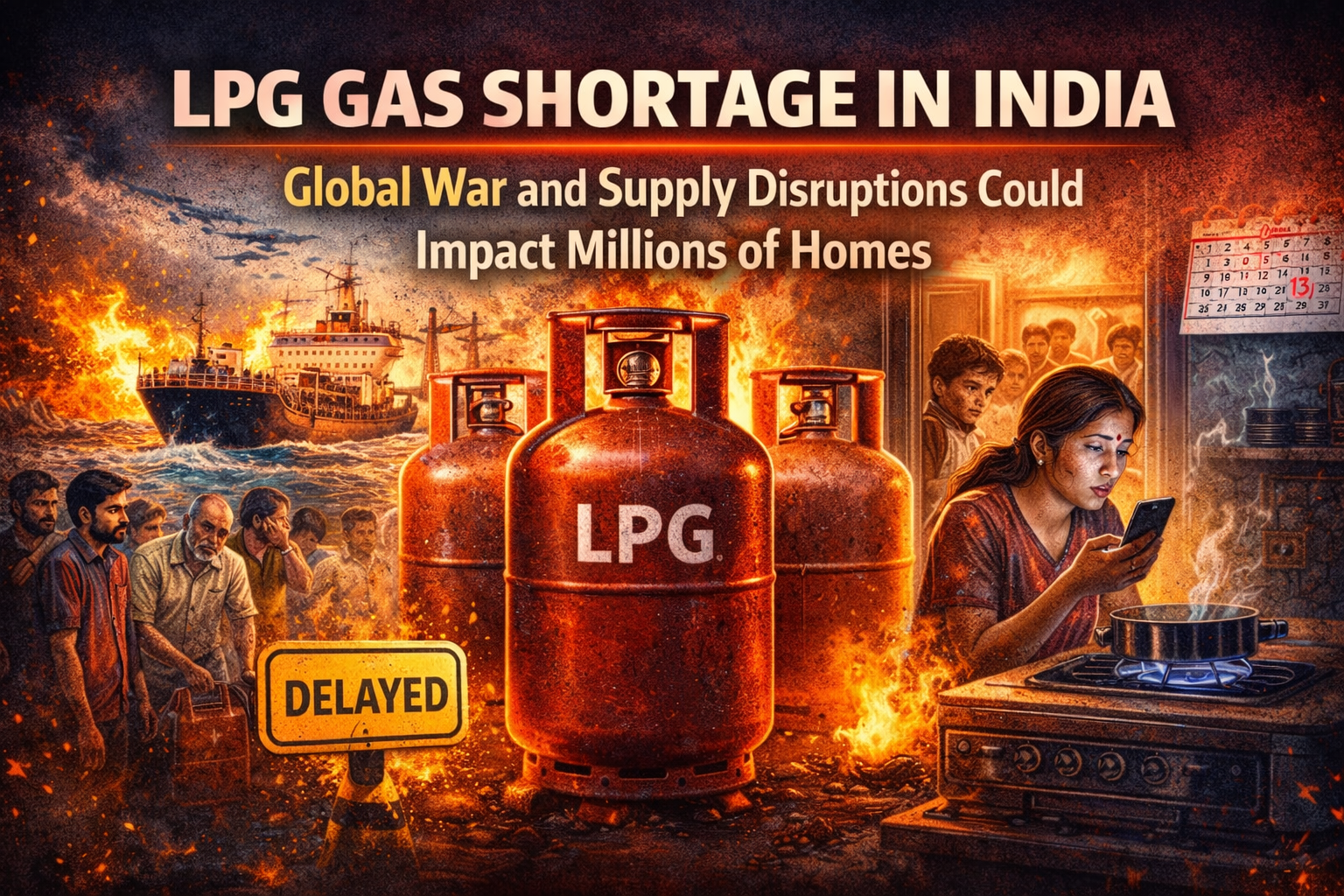
For millions of households across India, the LPG cylinder is more than just a cooking fuel—it is a daily necessity. However, recent global tensions and supply disruptions have raised concerns about a possible LPG shortage in the country.
Reports from several cities suggest that delivery delays, panic bookings, and restricted supplies are creating anxiety among consumers and businesses alike. The situation highlights how global geopolitics can directly affect everyday life in India.
So why is India suddenly facing concerns over LPG availability? And how serious could the situation become?
Let’s explore.
1. Why LPG Shortage Concerns Are Rising
One of the major reasons behind the recent concerns is the ongoing geopolitical tension in West Asia (Middle East).
Conflicts involving countries like Iran, Israel, and the United States have disrupted energy supply chains and shipping routes. Since many energy shipments pass through critical maritime routes, any instability in the region can affect global energy markets.
As a result, LPG shipments destined for countries like India may face delays or logistical challenges.
2. India’s Dependence on Imported LPG
India consumes a massive amount of LPG every year.
- India consumed around 31 million tonnes of LPG in 2024–25.
- Domestic production accounts for only about 12–13 million tonnes.
- The remaining demand is met through imports.
This means India imports nearly two-thirds of its LPG requirement, making the country vulnerable to global supply disruptions.
When shipping routes or production regions face instability, India’s supply chain can feel the impact almost immediately.
3. Panic Booking Is Making the Situation Worse
Interestingly, officials say that consumer panic is also contributing to the crisis.
Many households have started booking cylinders earlier than usual due to fear of shortage. This sudden surge in bookings has put additional pressure on the distribution network.
In some areas, this has even led to:
- Server crashes during online bookings
- Long queues at gas agencies
- Delayed deliveries
Experts say that panic buying can create temporary artificial shortages even when supply exists.
4. Impact on Restaurants, Hostels, and Small Businesses
The shortage is not affecting only households.
Several industries and businesses that depend heavily on LPG are also experiencing difficulties.
For example:
- Restaurants and food stalls have reported limited cylinder supplies.
- Some school and college hostels have altered menus due to gas shortages.
- Industries using LPG for production have slowed down operations.
This disruption could impact thousands of small businesses if the situation continues for a longer period.
5. Rising LPG Prices
Another major concern is the increase in LPG prices.
Recent reports suggest that domestic LPG cylinder prices have increased by around ₹60 in March 2026, adding to the financial burden of households.
Higher fuel prices also increase:
- Restaurant costs
- Transportation expenses
- Food prices
In other words, LPG price fluctuations can contribute to inflation across multiple sectors of the economy.
6. Government Response to the Crisis
The Indian government has already taken several steps to prevent a major crisis.
These measures include:
- Increasing domestic LPG production
- Prioritizing supply for household consumers
- Regulating industrial gas usage temporarily
- Monitoring black marketing of cylinders
Authorities have also urged citizens not to panic and avoid unnecessary bookings.
Officials say that supply chains are being adjusted to ensure that households receive priority access.
7. Alternative Cooking Options Being Considered
Due to uncertainty in LPG supply, some institutions and businesses are exploring alternative cooking solutions.
For example:
- Electric induction cooktops
- Microwave cooking systems
- PNG (piped natural gas) connections in urban areas
Even railway catering services have reportedly considered switching to electric cooking methods to reduce dependence on LPG.
Such changes could accelerate the shift toward electric cooking technologies in India.
8. What This Crisis Reveals About India’s Energy Future
The LPG shortage concerns highlight a deeper issue—India’s heavy dependence on imported energy.
Although the country has made significant progress in expanding energy infrastructure, global conflicts still pose risks to supply stability.
Experts believe India may need to focus on:
- Expanding domestic gas production
- Increasing strategic fuel reserves
- Promoting renewable energy and electric cooking solutions
These steps could reduce the country’s vulnerability to global energy disruptions.
Conclusion
The recent LPG shortage concerns in India are a reminder that global events can quickly affect everyday life. Conflicts in distant regions can disrupt energy supply chains and create ripple effects in households, businesses, and industries.
While the government has assured citizens that there is no immediate need to panic, the situation highlights the importance of building a more resilient energy system.
In the coming years, India may need to diversify its energy sources and strengthen domestic production to protect millions of households from future supply shocks.
Discover more from Online Guruji
Subscribe to get the latest posts sent to your email.
This supply chain vulnerability highlights why resilience matters across all industries. Just as energy security needs diversification, digital platforms build robust backup systems. At bet100 legit gaming operations, we’ve learned that contingency planning isn’t optional—it’s essential for maintaining user trust during global disruptions.
This dependency crisis perfectly illustrates how macro-geopolitics translate into micro-level household instability. The core lesson is the need for resilient, localized supply chains. Whether it’s energy or digital access, robust systems, like those found at phlruby login, prove that diversification mitigates global shocks.
[2414]Legit scatter login at slots na madaling manalo via Gcash,Mag-login sa legit scatter para sa slots na madaling manalo. Mag-download ng APK at subukan ang gcash casino online deposit. Maglaro na rito! visit: legit scatter
The VIP perks here are actually worth it. I feel valued as a player and the bonuses are generous. Check out br222vip for a premium experience.
Best place to spend your free time if you enjoy the thrill of the game. The login process is quick and secure. Try 55wwcombetlogin today.