

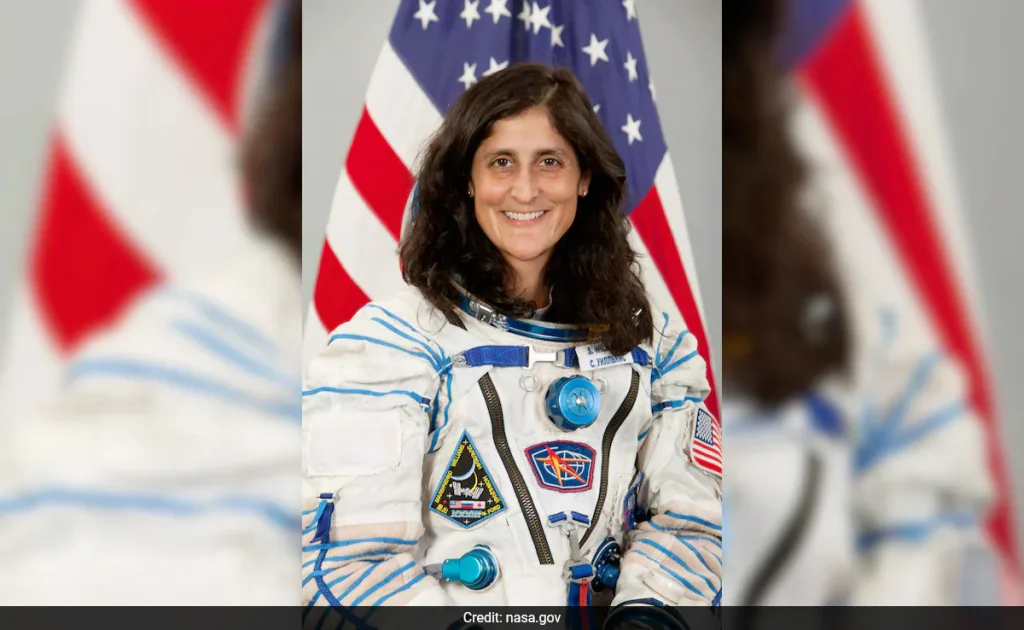
Sunita Williams, a trailblazing astronaut, has once again demonstrated her resilience and dedication to space exploration. In 2024, she embarked on what was supposed to be a short mission aboard Boeing’s Starliner spacecraft. However, unforeseen technical issues extended her stay on the International Space Station (ISS) to an extraordinary nine months. Her journey back to Earth in 2025 was filled with challenges, from unexpected spacecraft malfunctions to delays caused by severe weather conditions. Despite these obstacles, she showcased remarkable adaptability and leadership, ensuring mission success in the face of uncertainty.
A Mission That Turned into an Endurance Test
Originally planned as an eight-day mission, Williams’ journey took an unexpected turn when technical malfunctions delayed her return. Alongside astronaut Barry “Butch” Wilmore, she adapted to the extended mission, embracing the challenges of life in microgravity. The delay tested their endurance as they performed critical scientific research, spacewalks, and maintenance tasks essential for ISS operations.
Taking Command of the ISS
During her extended stay, Sunita Williams stepped into a leadership role, maintaining the crew’s morale and ensuring the smooth operation of the ISS. Her experience and composure under pressure were crucial in navigating the uncertainties of their prolonged mission.
The Challenges of Returning to Earth
NASA faced numerous obstacles in planning Williams’ safe return, including adverse weather conditions, spacecraft readiness, and external factors such as Hurricane Helene. After months of strategic adjustments, the Crew-10 mission, operated by SpaceX, successfully brought her home in March 2025. Landing off the coast of Florida, she returned as a symbol of perseverance and scientific achievement.
Post-Mission Recovery: Rebuilding Strength on Earth
Reintegrating into Earth’s gravity after months in space is no easy feat. Astronauts often experience muscle atrophy, weakened bone density, dizziness, and difficulty walking as their bodies readjust to Earth’s gravitational pull. Williams underwent extensive rehabilitation to counteract these effects and regain her strength. Williams underwent extensive physical therapy to rebuild muscle strength and bone density, along with psychological support to transition back to normal life. Her rehabilitation serves as a crucial aspect of human space exploration, providing insights into muscle recovery, bone density restoration, and psychological adaptation after prolonged exposure to microgravity. These findings are essential for designing future long-duration missions to the Moon and Mars, ensuring astronaut health and mission success.
Early Life and Aspirations: The Making of an Astronaut
Born on September 19, 1965, in Euclid, Ohio, Sunita Lyn Williams was raised in a culturally diverse household that nurtured her ambitions. Her early passion for aviation led her to the U.S. Naval Academy, where she earned a degree in physical science in 1987. She later became a naval aviator and test pilot, accumulating thousands of flight hours before joining NASA as an astronaut in 1998.
Record-Breaking First Mission: Expedition 14/15
Williams’ first spaceflight came on December 9, 2006, when she launched aboard the space shuttle Discovery (STS-116). During her 195-day stay aboard the ISS, she made history by conducting four spacewalks and becoming the first astronaut to run a marathon in space. Her return to Earth on June 22, 2007, aboard Atlantis (STS-117) marked the successful completion of a groundbreaking mission.
Historic Second Mission: Expedition 32/33
In 2012, Williams returned to space aboard a Russian Soyuz spacecraft, assuming command of the ISS as part of Expedition 32/33. She became the second woman to hold this prestigious role, further solidifying her place in spaceflight history. Over 127 days, she contributed to scientific research, maintenance, and multiple spacewalks before safely landing in Kazakhstan on November 18, 2012.
Impact and Legacy: Inspiring the Next Generation
Beyond her space missions, Sunita Williams continues to inspire students and young minds worldwide. She remains actively involved in NASA’s Commercial Crew Program, shaping the future of human spaceflight by collaborating with companies like Boeing and SpaceX. Her journey teaches valuable lessons:
- Education is the foundation: A strong academic background in STEM fields is essential for future astronauts.
- Perseverance matters: Williams’ resilience in overcoming mission challenges showcases the power of persistence.
- Physical and mental fitness are crucial: Space travel demands peak physical and psychological endurance.
- Curiosity drives exploration: Her passion for discovery led her to unprecedented achievements in space.

Discover more from Online Guruji
Subscribe to get the latest posts sent to your email.
Trying my luck on 199bet1, and so far, so good. A reliable spot with a decent variety of sports to bet on. Give it a look at 199bet1.
Peso63login, eh? Sounds promising! Trying to find a reliable place to log in and have some fun. Going to give it shot. Learn more here: peso63login