

Ek Chhota Scene, Badi Problem
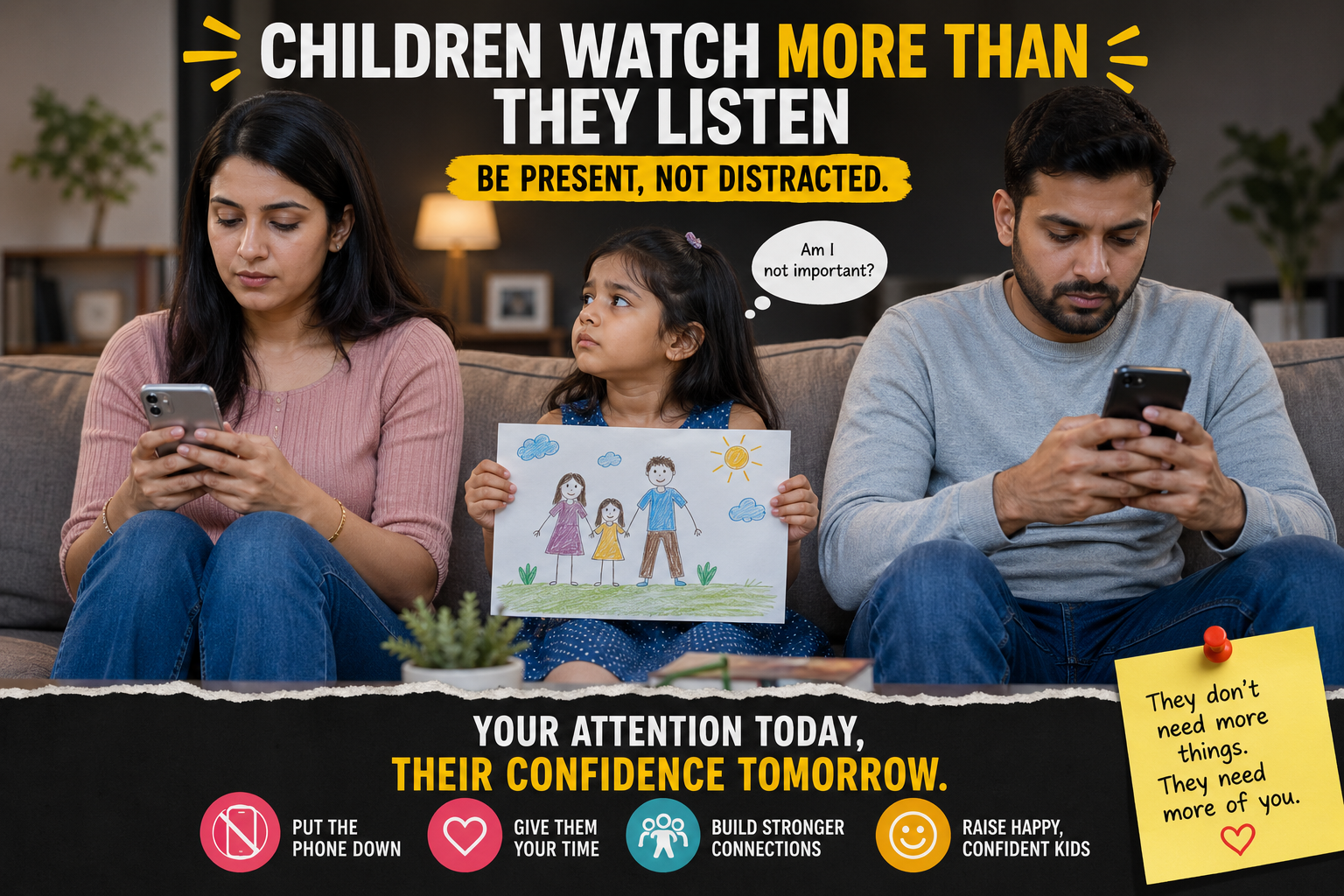
Shaam ka time hai. Ek chhota bachcha apni drawing lekar apni maa ke paas aata hai aur kehta hai, “Mumma dekho maine kya banaya!”
Maa ka jawab? “Haan beta, achha hai…” – bina upar dekhe, phone scroll karte hue.
Yeh scene aaj har ghar ki reality ban chuka hai.
Hum sochte hain ki bachche phones se addicted ho rahe hain… lekin ek uncomfortable sach yeh bhi hai—bachche sirf wahi seekh rahe hain jo woh dekh rahe hain.
Aur jo woh dekh rahe hain, woh hai:
👉 Parents ka attention = phone
👉 Conversations = distractions
👉 Presence = physical, but not emotional
The New Parenting Pattern: Present But Absent
Aaj ke parents pehle ki tarah physically present toh hain, lekin emotionally available kam hote ja rahe hain.
Isko psychology mein ek term se describe kiya jata hai—“Absent Presence”
Matlab:
Aap ghar par ho, lekin aapka mind kahin aur hai—Instagram, WhatsApp, Reels, ya news feed mein.
Bachche ke liye iska matlab simple hai:
👉 “Main important nahi hoon”
👉 “Mujhe wait karna padega”
👉 “Phone mujhse zyada important hai”
Yeh feelings dheere-dheere unke behavior aur personality ka part ban jati hain.
Why Children Watch More Than They Listen
Parents aksar bolte hain:
👉 “Phone kam use karo”
👉 “Zyada screen time mat lo”
Lekin bachche sunte kam hain, observe zyada karte hain.
Unke liye learning ka sabse bada source hai—imitation (nakal karna)
Agar woh dekhte hain ki:
- Papa uthte hi phone check karte hain
- Mumma khana khate waqt reels dekh rahi hain
- Family time bhi screen ke saath ho raha hai
Toh unke liye yeh sab normal behavior ban jata hai.
Impact 1: Emotional Disconnect
Bachchon ko sabse zyada zarurat hoti hai:
👉 Eye contact
👉 Smile
👉 Instant response
👉 Warm interaction
Jab yeh sab replace ho jata hai “wait karo, ek minute…” se, toh emotional gap create hota hai.
Yeh gap:
- Unko ziddi bana sakta hai
- Attention-seeking behavior badha sakta hai
- Ya unko chup aur introvert bana deta hai
Impact 2: Attention Seeking & Tantrums
Aapne notice kiya hoga:
Jab aap phone mein busy hote ho, bachcha zyada disturb karta hai.
Kyun?
Kyuki usse pata hai ki:
👉 “Agar main normal rahunga, toh mujhe ignore kiya jayega”
👉 “Agar main shout karunga ya tantrum karunga, tab attention milega”
Yeh pattern dangerous hai.
Isse bachcha seekhta hai ki negative behavior = attention ka shortcut
Impact 3: Language & Communication Delay
Chhote bachche words kaise seekhte hain?
👉 Face-to-face interaction se
👉 Conversations se
👉 Expressions se
Agar parent ka face hi phone ke peeche ho, toh:
- Vocabulary slow develop hoti hai
- Expression weak hota hai
- Communication confidence kam ho jata hai
Impact 4: Relationship Blueprint Change
Bachche sirf aaj ke liye nahi seekh rahe, woh apne future relationships ka blueprint bana rahe hain.
Agar unhone yeh dekha:
👉 “Log ek dusre ke saath hote hue bhi phone mein busy hote hain”
Toh woh bhi future mein:
- Apne partner ke saath same behavior repeat karenge
- Emotional bonding weak hogi
Matlab, aaj ka screen behavior kal ke relationships ko shape kar raha hai.
Impact 5: Reduced Self-Worth
Sabse silent aur dangerous effect hai—self-worth ka girna
Jab bachcha baar-baar ignore hota hai, uske mind mein ek belief ban jata hai:
👉 “Main important nahi hoon”
👉 “Mujhe attention ke liye struggle karna padega”
Yeh belief unki life ke har phase mein impact karta hai—
school, friendships, aur future career tak.
The Hidden Truth: It’s Not About Screen Time, It’s About Screen Priority
Problem sirf itni nahi hai ki phone use ho raha hai.
Problem yeh hai ki phone priority ban gaya hai.
Agar aap:
- Bachche se baat karte waqt bhi phone dekhte ho
- Unke saath khelte waqt bhi notifications check karte ho
Toh message clear hai:
👉 “Tum important ho… but not the most important”
Real-Life Reflection: Aap Apne Aap Se Yeh Sawal Poochhe
- Kya aap apne bachche ki baat sunte waqt phone side rakhte ho?
- Kya aapka bachcha aapse zyada aapke phone ko dekhta hai?
- Kya aap family time mein bhi scroll karte ho?
Agar jawab “haan” hai, toh aap akela nahi ho.
Yeh ek global problem ban chuki hai.
Simple Changes That Can Transform Parenting
Achhi baat yeh hai ki solution complicated nahi hai.
1. Phone-Free Time Create Karein
Roz ke 1–2 ghante “No Phone Zone” banayein
👉 Dinner time
👉 Bedtime
👉 Play time
2. Eye Contact Rule Follow Karein
Jab bachcha baat kare:
👉 Phone side rakhein
👉 Uski aankhon mein dekhein
👉 Proper response dein
Yeh chhoti cheez uske liye bahut badi hoti hai.
3. Model Behavior Change Karein
Agar aap chahte ho bachcha phone kam use kare,
toh sabse pehle aapko change hona padega.
4. Micro Moments Capture Karein
Bachche ko zyada time nahi chahiye…
unhe chahiye quality moments
👉 10 minute full attention = 1 hour distracted time se better
5. Digital Boundaries Set Karein
- Notifications off karein unnecessary apps ke
- Social media time fix karein
- “Just 5 minutes” ko control karein
Conclusion: Parenting Is Not About Being Available, It’s About Being Present
Aaj ke time mein sabse bada gift jo aap apne bachche ko de sakte hain, woh hai—aapka undivided attention
Phones zaroori hain, social media bhi zaroori hai, lekin:
👉 Bachpan wapas nahi aata
👉 Yeh moments repeat nahi hote
Ek din aapka bachcha bhi bada ho jayega…
aur shayad tab woh bhi aapse zyada apne phone mein busy hoga.
Tab aapko samajh aayega—
ki jo aaj aapne unhe diya, wahi woh aapko wapas de rahe hain.
Final Thought (Power Line for Readers)
“Bachche humari baatein nahi, humari aadatein follow karte hain. Agar hum screen se jude rahenge, toh woh bhi humse nahi, screen se hi jude rahenge.”
Discover more from Online Guruji
Subscribe to get the latest posts sent to your email.
This highlights the critical difference between physical presence and emotional availability. The challenge isn’t just screen time, but the diminishing capacity for deep, undivided attention. Perhaps the next generation of digital companions, like advanced AI systems such as clawra ai, can help parents model focused interaction, making digital tools aids for, rather than substitutes of, genuine connection.
The RNG aspect is key; analyzing the underlying probability distribution is fascinating! For more depth, check 35555 গেম. Keep studying those patterns!
Honestly, the focus on safety in the product description is key. It reminds me that knowing the right info, like checking bk4 app ডাউনলোড apk, is more important than the games themselves. Stay smart out there.
The risk assessment angle here is key; never treat these platforms like guaranteed income. For deeper insights, check out 47777bdt app. Smart play requires caution, always!
This whole ‘fast access’ vibe sounds promising for a quick break! Figuring out the flow is key, right? Maybe check out ph777 link online casino for a solid look. Hope it’s easy to navigate!
Finally a site that feels fair and honest. The bonuses for new players are actually decent and easy to claim. Give phgg7770 a try
The game variety here is top notch. I love how easy it is to navigate through the different categories. nike88slot is becoming my go to spot for some quick fun.
Finally found a platform that doesn’t lag during peak hours. The interface at ph68jllogin is super intuitive and easy to navigate.
Finally found a platform that doesn’t lag during peak hours. The game variety here is top notch and I really enjoy the bonus offers. Check out ph6899jili if you want a great experience.
The mobile experience is just brilliant. I can play my favorite games anywhere without any stuttering. The ph8k8app is a game changer for me.
The graphics are amazing and the gameplay is just top notch. It feels like a real casino from the comfort of my own home. Big shoutout to ss7777casino.
Just had a massive win last night! The thrill on this site is unmatched and the graphics are top notch. phbigwinph is definitely my new favorite spot.
I had a great run yesterday and won big! The graphics are sleek and the gameplay is fair. I will definitely be coming back to korwin39